We appreciate the Greater Kanawha Valley Foundation for supporting our work to address the unmet needs of children/adolescents affected by the drug epidemic.

Project Updates

Join us for monthly community conversations at the Kanawha County Public Library in Charleston from 6 pm - 7 pm. A limited amount of gas cards are available for those who are driving in from out of town. Parking is free at the Summer St. garage. Email us with questions or ideas for discussion topics.

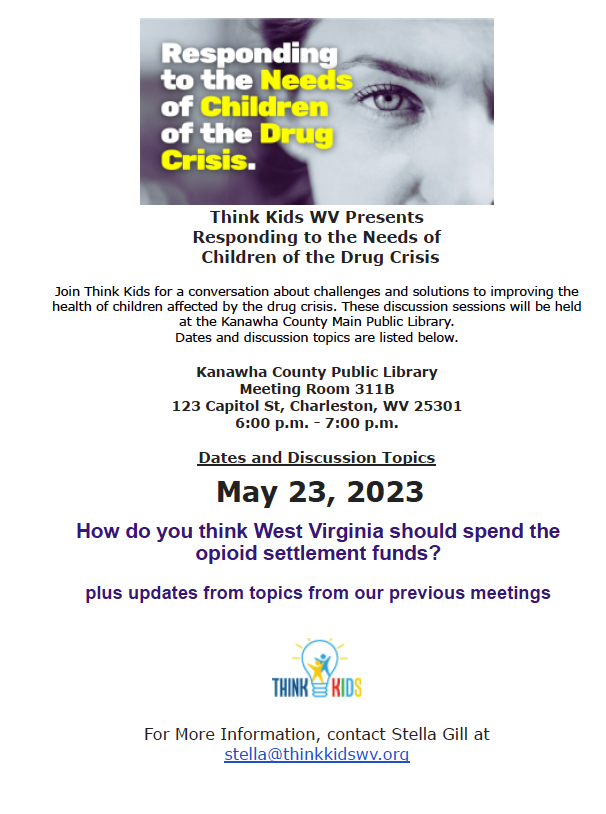
Our next meeting is on May 23 at the Charleston Public Library. Register here.

AKnisely
Screenshot 2023-04-12 at 11.04.16 PM

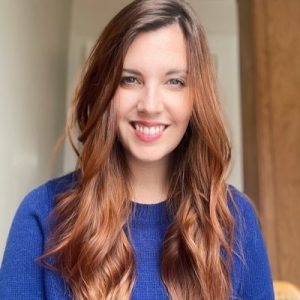
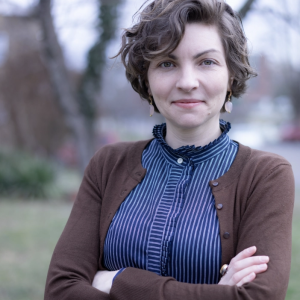
We’re excited to have investigative reporter Amelia Knisely and videographer Tijah Bumgarner working with us on the project. They will be interviewing community members about their experiences with substance use disorder and sharing their stories.

Are there services in counties or communities around the state for kids affected by the drug epidemic?

By services, we mean: health care, mentoring, social support, and community resources that address social determinants of health, like food insecurity. Too often, we point people toward services that are miles away, are no longer in operation, or have restrictive service guidelines.

And yet, when we talk to policymakers, we lack the ability to articulate and prioritize where the need is greatest— where to strategically allocate funding and resources.

This year, we took a deeper dive into the landscape of community services for the Responding to the Needs of Kids Affected by the Drug Crisis project. Do kids really have access to meaningful services in their communities?

Our conclusion: Sometimes.

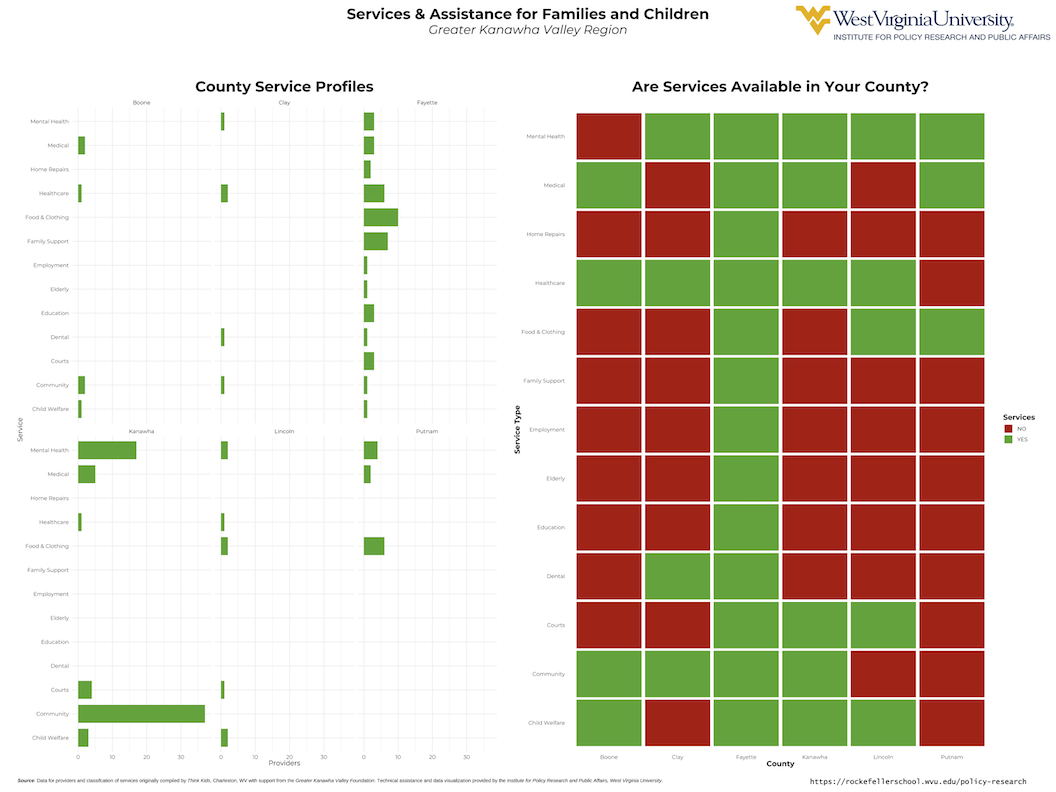
The above graphic is the final data visualization of the spreadsheet we shared with this email list a few weeks ago. We appreciate the expertise of Dr. Samuel Workman, a WVU professor and director of the Institute for Policy Research and Public Affairs in the John D. “Jay” Rockefeller IV School of Policy and Politics.

This graphic represents whether programs, services, and resources are available within each of the following counties: Boone, Clay, Fayette, Kanawha, Lincoln, and Putnam- TGKVF service area.

Before we assume that a program or service is available and accessible for children and youth, we need to take a harder look around our communities to see if services are available and accessible to those without the financial means to access them.

If services are unavailable, we should prioritize our advocacy efforts to ensure they’re available.

If services are available, we should promote them! We can begin by centralizing this data in WV 211 and ensuring those working directly with kids and families— social workers, health care providers, school staff, afterschool and childcare workers, etc.— are pointing families in this same direction.

There’s much we can do. Many thanks to those who worked with us on this project this year. We have posters and flyers of the data visualization available and are happy to send them to you.
Watch out project playlist on YouTube:

Check out our YouTube channel to watch previous Facebook Live videos with experts who can help us dive deeper into issues that project participants want to know more about- like foster care, mentoring, helping grandparents raising grandchildren, and new data about kids and the drug crisis. Check out our events calendar for the next scheduled topic for discussion.

Our 2021 report is out! This report is the culmination of the second year of work on the project, Addressing the Unmet Health Care Needs of Children Affected by the Drug Crisis. This project was funded in part by The Greater Kanawha Valley Foundation, managed by Think Kids, and conducted with the help of dozens of volunteers. The project welcomed anyone from around the state who wanted to complete surveys or attend listening sessions, but we specifically engaged in discussing solutions with people in the TGKVF service area: Boone, Clay, Fayette, Kanawha, Lincoln, and Putnam Counties.

If you live in Boone, Clay, Fayette, Kanawha, Lincoln, or Putnam Counties, we can request free copies of our 2020-2021 report, From the Ground up: Addressing the Unmet Needs of Children Affected by the Drug Crisis. Complete the form below. You can also read it online or download it here.

New to the project?

Kids affected by the drug crisis have acute and immediate needs that are different from adults. We’re working on a ground-up approach to identifying, articulating, and responding to these needs on the community level.

If you live in Boone, Clay, Fayette, Kanawha, Lincoln, and Putnam Counties, we need your help.

At the heart of our nation’s opioid epidemic lies West Virginia, and in the middle of this crisis are its children. The increase in parental drug misuse and abuse, impaired parenting, incarceration, extended separation from parents, overdose deaths, and introductions into the child welfare, court, and foster care systems have resulted in a children’s health crisis in our state.

For these children, adverse childhood experiences (ACEs) are highly prevalent and associated with a heightened risk of poor health outcomes in childhood and adulthood. West Virginia’s response to the drug epidemic has been a patchwork of reactionary, adult-focused programs and services that have been systemic, siloed, and do not address the health care needs of affected children.

This project aims to assess how communities are responding to the unmet health care needs of children affected by the drug crisis. Read the op-ed, launching our project in the Charleston Gazette-Mail.

How you can get involved:

  1. Join our Facebook group, Kids and the Drug Crisis- From the Ground Up.
  2. Join us for a Listening Session. We’ll ask you 19 questions about kids in your community, the challenges they face, successful programs, dealing with COVID-19, and how systems are responding to their needs- the health care system, court system, child welfare, and foster care systems, as well as your community’s response. You’re free to be candid; your responses remain confidential.
  3. Prefer to discuss these issues one-on-one? Email [email protected]. We’ll schedule an interview just with you and ask you the same questions we ask during the Listening Sessions.
  4. Spread the word. Share information about the project with neighbors, colleagues, family, and on social media.
  5. Volunteer. Let us know if you’d like to help in our efforts to engage communities. We’d love a helping hand!
  6. Subscribe to our newsletter.

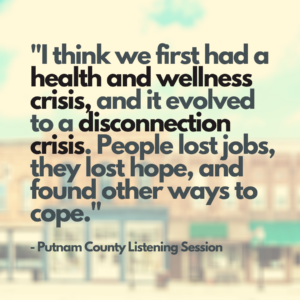
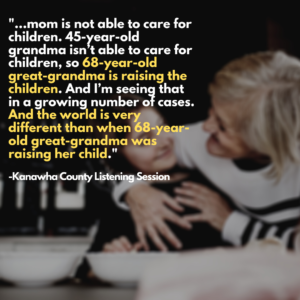
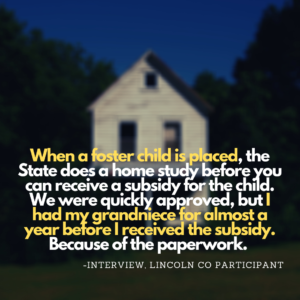
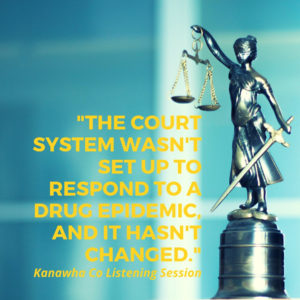
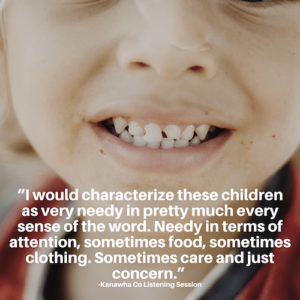
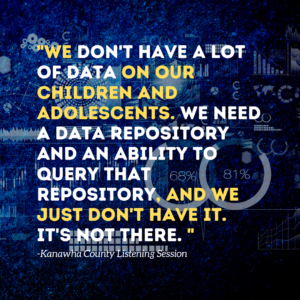
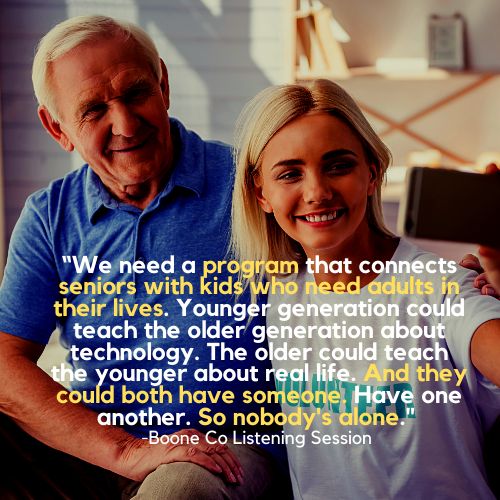
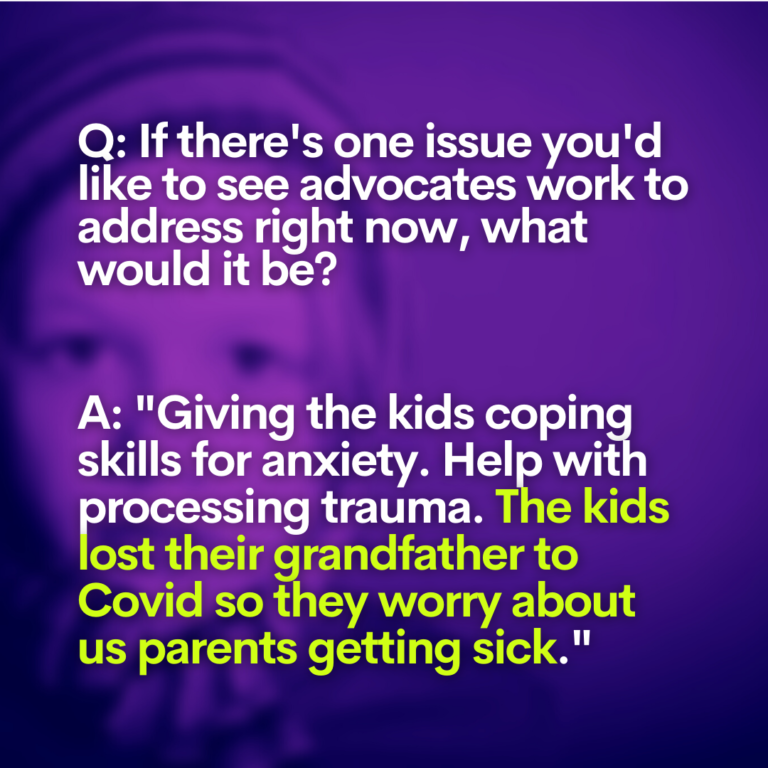
Participant Quotes:

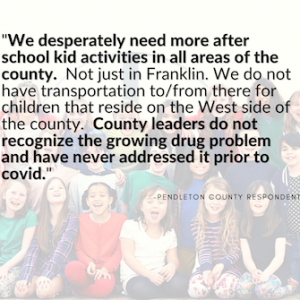
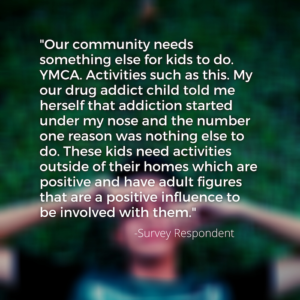
We desperately need more after school kid activities
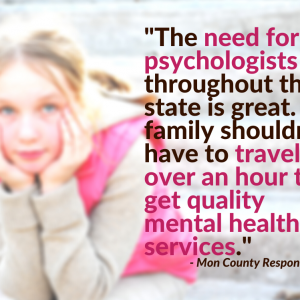
The need for psychologists throughout the state is great. A family shouldn’t have to travel over an hour to get quality mental health services.
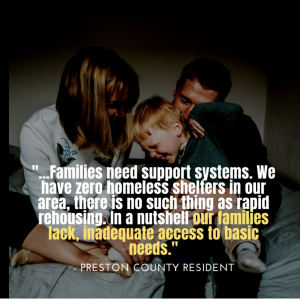
Family Laughing

Sites we love

Skip to content